
Updating your Outlook password isn’t just about basic security anymore—it’s about keeping your entire Microsoft 365 ecosystem synced. Whether you’ve been prompted by a security alert, your company requires a refresh, or you’re just practicing good 2026 password hygiene, staying updated is crucial for US users who rely on Outlook for work, school, and personal communication.
Rest assured, changing your credentials doesn’t have to be a headache. This guide covers the exact, verified steps for the Web, Windows Desktop, Mac, and Mobile apps. We will also show you how to fix that frustrating “Sync Error” that often pops up immediately after a password reset.
Quick Answer: The Fastest Way to Change Your Outlook Password
To change your Outlook password, you must update it at the source: your Microsoft Account security settings. Once changed online, your desktop and mobile apps will prompt you to enter the new credentials to resume syncing.
- Step 1: Log in to the Microsoft Security Dashboard.
- Step 2: Select Password security and click Change my password.
- Step 3: Verify your identity, enter your old password, and set a new one.
- Step 4: Re-authenticate your Outlook apps on your iPhone, Android, or PC.
Why You Might Need to Change Your Outlook Password
In the current cybersecurity landscape, there are several common reasons why US-based users find themselves needing a password refresh:
- Security Alerts: Microsoft detected a suspicious login attempt from an unrecognized location.
- Corporate Policy: Many US workplaces require a password change every 90 days to maintain compliance.
- Forgot Credentials: You’ve been logged in for so long that you simply don’t remember the original password.
- Data Breaches: News of a third-party leak often prompts proactive users to secure their primary email accounts.
Quick Reference Table – Change Outlook Password (2026)
| Platform | Steps Summary |
|---|---|
| Web (Browser) | Sign in → Security → Password security → Change password → Save. |
| Windows 10/11 | Change via Web first → Open Outlook → Enter new password when prompted. |
| Mac | Change via Web first → Preferences → Accounts → Update Password. |
| iOS/Android | Change via Web first → Open App → Sign back in with new credentials. |
Step-by-Step: How to Change Outlook Password on the Web
Since Outlook is tied to your Microsoft account, this is the primary method. All other apps “follow” the password set here.
- Navigate to the Microsoft Security Dashboard.
- Sign in with your current credentials.
- Find the Password security tile and click Change my password.
- Verify your identity: Microsoft will send a code via SMS, email, or your Microsoft Authenticator app.
- Enter your Current password, then type and confirm your New password.
- Click Save. (Note: You may be asked to sign back into all your devices after this).
Updating Your Password in the Outlook Desktop App (Windows)
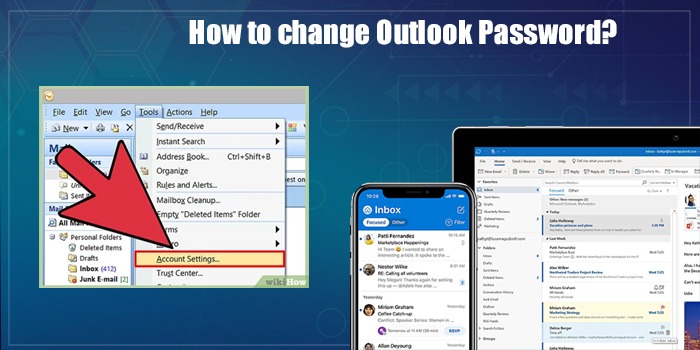
Note: You cannot “create” a new password inside the Outlook app for Microsoft 365 or Outlook.com accounts. You must change it on the web first, then update the app’s local “key.”
- Open the Outlook app on your Windows PC.
- Click File in the top-left corner.
- Select Account Settings → Account Settings again.
- Select your email and click Repair (or Change for older versions).
- If Outlook detects the password change, it will show a pop-up login screen. Enter your new password here.
- Click Done to resume syncing.
How to Change Outlook Password on Mobile (iPhone & Android)
The mobile app is designed to detect security changes automatically. Here is how to handle it manually if it gets stuck:
- Open the Outlook App: Usually, a banner will appear saying “Please sign in to [email].”
- Manual Update: Tap your profile icon (top left) → Tap the Gear icon (Settings).
- Select Account: Tap the specific email account that is failing to sync.
- Reset Account: If you aren’t prompted for a password, tap Reset Account. This restarts the app’s sync process and will force the new password prompt to appear.
- Sign In: Enter your new 2026 credentials when the Microsoft login page appears.
Advanced Fixes: Resolving the “Sync Error” Loop
Sometimes, even after you change your password, Outlook keeps asking for the old one or says “Need Password” in the status bar. This is a common Credential Manager glitch on Windows.
- Close Outlook completely.
- In the Windows Search bar, type “Credential Manager” and open it.
- Select Windows Credentials.
- Find any entries labeled MicrosoftOffice16_Data:ADAL or Outlook and click Remove.
- Restart Outlook. It will now treat your login as “fresh” and allow the new password to work without errors.
How to Prevent Outlook Issues in the Future
To keep your account running smoothly and avoid being locked out, follow these 2026 security best practices:
- Use a Passphrase: Instead of complex symbols, use 4-5 random words (e.g., Blue-Coffee-Running-Laptop). It’s harder for hackers to crack but easier for you to remember.
- Enable 2FA: Always use Two-Factor Authentication. If someone steals your password, they still can’t get in without your phone.
- Check Recovery Info: Ensure your backup phone number and secondary email are up to date in your Microsoft settings.
- Keep Apps Updated: Software updates often include fixes for login and sync bugs.
FAQs: Common Outlook Password Questions
Why is my ‘Change Password’ button greyed out?
If you use a Work or School account, your IT department likely manages your credentials. You must change your password via your company’s portal (like Okta or Azure AD) or by pressing Ctrl+Alt+Del on your office computer.
What if I forgot my Outlook password and can’t log in?
Go to the Microsoft Recovery Page. You will need access to your recovery email or phone number to receive a reset code.
Does changing my Outlook password affect my Xbox or Windows login?
Yes. Your Outlook account is a unified Microsoft Account. Changing your password here updates it for Xbox, Windows 11 login, OneDrive, and Skype.
Will clearing my browser cache delete my emails?
No. Clearing your cache and cookies only removes temporary files from your browser. Your emails are stored safely on Microsoft’s servers.
The Final Verdict
Keeping your Outlook password updated is the best way to protect your digital life. While the process is straightforward, the key is ensuring you update the “source” account on the web before trying to fix the desktop or mobile apps. If you’ve followed these steps and are still facing sync issues, try the Credential Manager fix mentioned above—it solves 90% of lingering login problems for Windows users.